
Stop Recovery Agent Harassment: The Ultimate Guide to RBI Guidelines, Legal Rights & BNS Laws
Are loan recovery agents harassing you? Learn how to stop them immediately using RBI guidelines, file police complaints under new BNS sections, and claim compensation for mental agony.
Introduction
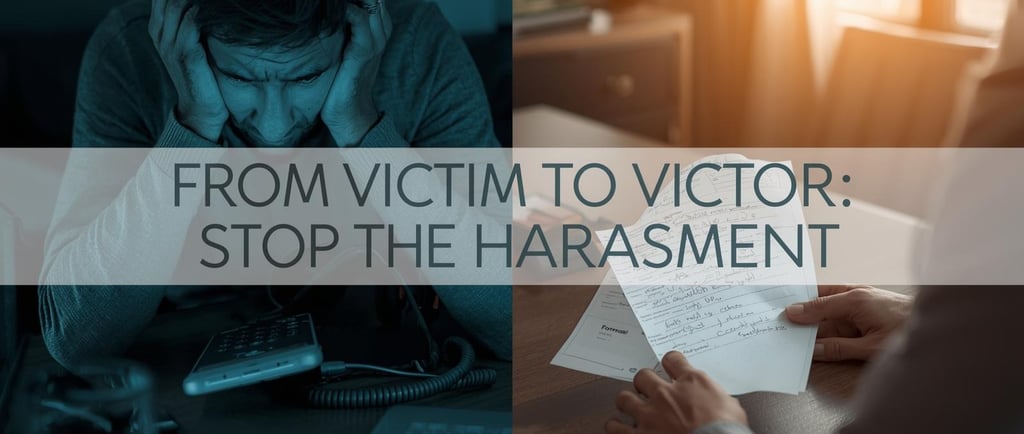
Is your phone ringing non-stop? Are recovery agents using abusive language, threatening you, or calling your family and workplace? If yes, you are likely facing illegal loan recovery harassment.
Borrowing money and facing financial difficulty is not a crime. However, harassing, intimidating, and threatening a borrower is a crime in India.
Many borrowers suffer in silence because they don't know the law. They believe the banks hold all the power. This guide will change that.
Based on current regulations, including landmark Supreme Court rulings, RBI directives, and the new Bharatiya Nyaya Sanhita (BNS), we have compiled the ultimate resource to help you immediately stop recovery agent harassment, protect your dignity, and claim compensation for the mental agony caused.
1. The Golden Rules: RBI Guidelines Recovery Agents Must Follow
The Reserve Bank of India (RBI) has issued a strict "Fair Practices Code" that banks and Non-Banking Financial Companies (NBFCs) must adhere to. Their agents are bound by these rules.
If an agent breaks these rules, they are acting illegally:
The Time Rule: Agents can only contact you between 07:00 AM and 07:00 PM. Calls outside these hours are a violation.
Mandatory Identification: Every recovery agent must carry an authorization letter and an Identity Card issued by the bank or agency. You have the right to demand to see it before talking to them.
Respect for Privacy: Agents must respect your privacy. They cannot intrude into your home without permission.
Decency and Decorum: Agents are strictly prohibited from using abusive, threatening, or uncivil language.
No "Musclemen": The Supreme Court of India has explicitly banned the use of "musclemen" or goons for recovery.
2. Identifying Illegal Harassment: When to Draw the Line
Legitimate recovery involves polite reminders to pay dues. Harassment begins when the tactic shifts from communication to intimidation.
You are being harassed if the agent:
Uses foul language or shouts at you.
Threatens you with immediate arrest or jail time (Recovery agents have zero police powers).
Calls your parents, spouse, friends, or office HR to shame you publicly.
Visits your workplace to create a scene.
Forces you to sign blank cheques or documents under duress.
3. Your Immediate Action Plan: The "Calm Control" Method
If an agent is harassing you right now, do not panic and do not argue. Follow these steps to take control of the situation:
Stay Calm and Record: Never shout back. If possible, start recording the call or video record their visit immediately. State clearly on the recording that you are feeling threatened.
Verify Credentials: Ask for their full name, employee ID, and the name of the agency they represent. If they refuse, terminate the interaction.
Demand Written Communication: Tell them to stop calling and to send any official demands via email or registered post. This creates a paper trail.
Do Not Pay Cash: Never hand cash to a visiting agent. All payments should be made through official banking channels with proper receipts.
4. Building Your Legal Arsenal: The Evidence File
You cannot fight harassment with vague complaints like "they are bothering me." You need proof. Start compiling an evidence file immediately:
Call Logs & Recordings: Save all call records showing the frequency and timing of calls (especially those outside 7 AM - 7 PM). Save audio recordings of abusive language.
Screenshots: Take screenshots of threatening WhatsApp messages, SMS, or emails.
Visitor Details: Maintain a diary noting dates, times, and names of agents visiting your home or office.
Witness Statements: If neighbors or colleagues witnessed a scene created by agents, ask them to write a brief statement of what they saw.
5. How to File Formal Complaints (The Escalation Ladder)
Once you have evidence, use this structured escalation ladder to stop the harassment.
Step 1: The Bank's Grievance Redressal
File a formal written complaint with the bank's Nodal Officer or Grievance Redressal cell. Attach your evidence. Banks usually take these seriously to avoid regulatory trouble.
Step 2: The Banking Ombudsman (RBI)
If the bank does not resolve the issue within 30 days, or if you are dissatisfied with their response, file a complaint with the RBI Banking Ombudsman. This is a powerful mechanism for service deficiencies.
Step 3: Police Complaint (FIR)
If the agents are using threats of violence, criminal intimidation, or obscene language, do not wait for the bank. Approach your nearest police station to file an FIR.
6. Legal Firepower: BNS Sections and Case Laws
Knowing the specific provisions of the new Bharatiya Nyaya Sanhita (BNS), 2023 makes your complaint impossible to ignore. These are the current laws effective from July 1, 2024.
Key BNS Sections useful in harassment cases:
Section 351 (Criminal Intimidation):
Section 351(2): Punishes anyone who threatens injury to your person, reputation, or property to cause alarm.
Section 351(3): If the agent threatens you with death, grievous hurt, or destruction of property by fire, they face up to 7 years in prison.
Section 79 (Insulting the Modesty of a Woman): This section punishes any word, gesture, or act intended to insult the modesty of a woman, including intruding upon her privacy.
Section 352 (Intentional Insult): Punishes intentional insults that are likely to provoke a breach of the peace or cause you to commit an offence.
Landmark Supreme Court Judgment:
In the famous case of ICICI Bank Ltd. v. Prakash Kaur, the Supreme Court ruled that banks cannot use goons for recovery. Crucially, it established that the bank is vicariously liable for the actions of its recovery agents, even if they are third-party contractors. The bank cannot wash its hands of their bad behavior.
7. Claiming Compensation for Mental Agony
You don't just have to stop the harassment; you can hit back financially.
Under the Consumer Protection Act, 2019, banking services fall under consumer rights. If you have suffered "deficiency in service" through harassment, resulting in mental agony, emotional distress, or reputational damage, you can approach the Consumer Forum.
Courts have frequently awarded compensation to borrowers who were subjected to illegal recovery tactics, forcing banks to pay for the humiliation they caused.
Conclusion
Debt is a civil matter, not a criminal one. No matter how much you owe, you never lose your fundamental right to dignity and decent treatment. By knowing these guidelines and following the steps above, you can shift the power dynamic, stop the harassment, and regain peace of mind.
Disclaimer
Legal Disclaimer:
The information provided in this article is for general informational and educational purposes only and does not constitute legal advice. As of July 1, 2024, the Indian Penal Code (IPC) has been replaced by the Bharatiya Nyaya Sanhita (BNS). This article references the new BNS provisions. Laws and regulations are subject to change. Reading this article does not create an attorney-client relationship. For specific legal problems or representation regarding loan harassment, readers are advised to consult with a qualified legal professional or visit their nearest police station/consumer forum.
References & Legal Citations
Landmark Supreme Court Judgments:
ICICI Bank Ltd. v. Prakash Kaur & Ors, (2007) 2 SCC 711. (Supreme Court ruling holding banks vicariously liable for the actions of their recovery agents and condemning the use of "musclemen").
Shanti Devi Sharma v. ICICI Bank Ltd., (2011) 178 DLT 732. (Delhi High Court judgment recognizing the liability of banks in cases of extreme harassment leading to suicide).
Statutory Provisions (New Criminal Laws - Effective July 1, 2024):
Bharatiya Nyaya Sanhita (BNS), 2023:
Section 351: Criminal Intimidation (Replaces IPC 503/506).
Section 79: Word, gesture or act intended to insult the modesty of a woman (Replaces IPC 509).
Section 352: Intentional insult with intent to provoke breach of peace (Replaces IPC 504).
Reserve Bank of India (RBI): Master Circular - Fair Practices Code for Lenders (Guidelines on recovery agent conduct, hours of contact, and privacy).
The Consumer Protection Act, 2019: Official Act covering "Deficiency in Service" and unfair trade practices.
Academic & Legal Analysis:
Bindu, K. (2020). The Consumer Protection Act, 2019: A new milestone in empowering consumers. Supremo Amicus, Vol 15.
Pottow, J. A. E. (2011). Consumer finance and insolvency law in India: A case study. Brooklyn Journal of International Law, 36(1), 75–112.
Thomas, A. (2022). On product liability, unwarranted remitting to civil court, and lost contents of lockers. International Journal on Consumer Law and Practice, 10, 157–169.
Stop Recovery Agent Harassment in India: Your Complete Guide to Legal Rights, RBI Rules, and Fighting Back
© 2024 - 2026 Loancure Solutions. All Rights Reserved.


Email Us - info@loancuresolutions.com
Working Hours - Mon-Sat | 9:00 AM - 9:00 PM
Debt Harassment Relief
Debt Settlement Services
Legal Support
Dispute & Arbitration Handling
Counselling & Financial Management
Privacy Protection & Contact Shielding